
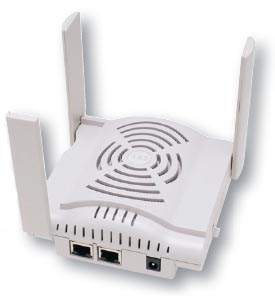
Aruba AP-125 Dual-Radio Wireless Access Point
Dual-radio 802.11a/n or 802.11b/g/n with 3 integrated antennas

| Aruba Networks Products | ||
|---|---|---|
| Aruba Indoor Wireless Access Points | ||
| Aruba 125 Wireless Access Point (802.11a/n + b/g/n) | AP-125 List Price: $995.00 Our Price: $845.00 |
|
| Aruba 125 Wireless Access Point (802.11a/n + b/g/n), FIPS/TAA | AP-125-F1 List Price: $1,195.00 Our Price: $1,015.00 |
|
Click here to jump to more pricing!
Aruba AP-125 Access Point:
Overview:
The multifunction AP-124 and AP-125 are ultra-high-performance indoor 802.11n access points (APs) designed for maximum deployment flexibility in high-density environments that require above-ceiling or enclosure-based installations. These high-speed APs deliver wire-like performance at data rates up to 300 Mbps per radio.
The AP-124 features two 3x3 MIMO dual-band 2.4-GHz/5-GHz radios with detachable antenna interfaces while the AP-125 features the same radios with integrated antenna elements. Both are built to provide years of troublefree operation and are backed by a limited lifetime warranty.
Working with Aruba’s line of centralized Mobility Controllers, the AP-124 and AP-125 deliver secure, high-speed network services that move users to a “wireless where possible, wired where necessary” network access model. The network can then be rightsized by eliminating unused Ethernet switch ports and thereby reducing operating costs. 802.11n enables the use of wireless as a primary connection with speed and reliability comparable to a wired LAN. It also increases performance by utilizing techniques such as channel bonding, block acknowledgement and MIMO radios. Advanced antenna technology also increases range and reliability.
The key to ensuring wire-like performance and reliability is Aruba’s unique Adaptive Radio Management and spectrum analysis* capabilities, which manage the 2.4-GHz and 5-GHz radio bands to deliver maximum client performance while mitigating any RF interference.
The multifunction AP-124 and AP-125 can be configured through the Mobility Controller to provide WLAN access with part-time air monitoring, dedicated air monitoring for wireless IPS and spectrum analysis, Remote AP (RAP) functionality or secure enterprise mesh. The AP-124 and AP-125 feature dual 100/1000BASE-T Ethernet interfaces and operate from standard 802.3af power-over- Ethernet (PoE) sources.
Specifications:
| Technical Specifications for AP-124 and AP 125 | |
|---|---|
| Application | |
| 802.11n indoor AP designed for maximum deployment flexibility in high-density environments that require above-ceiling or enclosure-based installations. | |
| Operating Mode | |
| 802.11a/b/g/n AP, air monitor (AM) and Remote AP (RAP) Spectrum monitor, AM and RAP AM and RAP Remote AP |
|
| Radios | |
| Software-configurable dual radio capable of supporting 2.4 GHz and 5 GH | |
| RF Management | |
Automatic transmit power and channel management control with auto coverage hole correction via Adaptive Radio Management (ARM) Spectrum analysis* remotely scans the 2.4-GHz and 5-GHz radio bands to provide increased visibility into non-802.11n RF interference sources and their effect on 802.11n channel quality. |
|
| Antenna | |
| AP-124: | Three RP-SMA interfaces for external antenna support (supports up to 3x3 MIMO with spatial diversity) |
| AP-125: | Integrated, tri, omni-directional multiband dipole antenna elements (supports up to 3x3 MIMO with spatial diversity) |
| AP-125 Antenna Maximum Gain: | 2.4 to 2.5 GHz / 3.2 dBi |
| Wireless Radio Specifications | |
| AP type: | Dual-radio, dual-band 802.11n indoor |
| Supported Frequency Bands (country-specific restrictions apply): | 2.400 - 2.4835 GHz 5.150 - 5.250 GHz 5.250 - 5.350 GHz 5.470 - 5.725 GHz 5.725 - 5.850 GHz |
| Available Channels: | Controller-managed, dependent upon configured regulatory domain |
| Supported Radio Technologies: | 802.11b: Direct-sequence spread-spectrum (DSSS) 802.11a/g/n: Orthogonal frequency division multiplexing (OFDM) 802.11n: 3x3 MIMO with 2 spatial streams |
| Transmit Power: | Configurable in increments of 0.5 dBm |
| Maximum Transmit Power: | 2.4GHz: 23 dBm (limited by local regulatory requirements) 5 GHz: 22 dBm (limited by local regulatory requirements) |
| Maximum Ratio Combining (MRC) for improved receiver performance Association Rates (Mbps): | 802.11b: 1, 2, 5.5, 11 802.11a/g: 6, 9, 12, 18, 24, 36, 48, 54 802.11n: MCS0 - MCS15 (6.5 Mbps to 300 Mbps) |
| 802.11n High-Throughput (HT) Support: | HT 20/40 |
| 802.11n Packet Aggregation: | A-MPDU, A-MSDU |
| Advanced Features | |
| Integrated RAP, secure enterprise mesh point or portal, and wireless intrusion detection and prevention Integrated Trusted Platform Module (TPM) for secure storage of credentials and keys SecureJack-capable for secure tunneling of wired Ethernet traffic |
|
| Power | |
| 48 V DC 802.3af or 802.3at or PoE + 5 V DC for external AC supplied power (adapter sold separately) Maximum power consumption: 16 watts | |
| Wireless Radio Specifications | |
| Interfaces | |
| Network: | 2 x 100/1000Base-T Ethernet (RJ45), auto-sensing link speed and MDI/MDX Accepts 48 V DC 802.3af or 802.3at or PoE+ interoperable Power-over-Ethernet (PoE-PD) on either port |
| Antenna (model AP-124 only): | 3 x RP-SMA antenna interfaces (supports up to 3x3 MIMO with spatial diversity) |
| Other: | 1 x RJ-45 console interface |
| Interfaces | |
| Standard: | Wall Tool-less Ceiling tile rail (15/16") |
| Optional mounting kit: | Desk Stand & Wall Outlet Mount Plate Solid wall stand-off Ceiling tile rail (15/16" & 9/16" recessed or non-recessed) |
| Security: | Kensington security lock point (model AP-125 only) |
| Mechanical | |
| Dimensions / Weight: | 124 mm x 130 mm x 51 mm (4.9" x 5.13" x 2.0") 0.42 kg (15 oz) |
| Environmental | |
| Operating: | Temp: 0° C to +50° C (+32° F to +122° F) Humidity: 5 to 95% non-condensing) |
| Storage and Transportation Temperature Range: | Temp: -40° C to +70° C (-40° F to +158° F) |
| Regulatory | |
| FCC Part 15 | Industry of Canada |
| MIC | Anatel |
| NOM/COFETEL | SRRC/CCC |
| GS Mark | CE Mark |
| R&TTE Directive - 1995/5/EC | Low Voltage Directive - 72/23/EEC |
| EN 300 328 | EN 301 893 |
| EN 301 489 | UL/IEC/EN 60950-1:2001 |
| CB, cULus | AS/NZS 4268, 4771 |
| UL2043 Compliant | |
| Certifications | |
| Wi-Fi certified: | 802.11a/b/g/n |
| FIPS 140-2 (when operated in FIPS mode) | |
Wireless Radio Specifications:
| RF Performance Table | ||||
|---|---|---|---|---|
| Max TX power per active TX chain (dBm) | RX Sensitivity (dBm) | Max TX power per active TX chain (dBm) | RX Sensitivity (dBm) | |
| 2.4 GHz | 5 GHz | |||
| 802.11b | ||||
| 1Mbps 2Mbps 5.5Mbps 11Mbps |
+18.0 +18.0 +18.0 +18.0 |
-93.0 -91.0 -90.0 -88.0 |
||
| 802.11 a/g | ||||
| 6Mbps 9Mbps 12Mbps 18Mbps 24Mbps 36Mbps 48Mbps 54Mbps |
+17.0 +17.0 +17.0 +17.0 +17.0 +17.0 +16.0 +13.0 |
-92.0 -92.0 -92.0 -91.0 -88.0 -85.0 -81.0 -79.0 |
+17.0 +17.0 +17.0 +17.0 +17.0 +16.0 +15.0 +13.0 |
-91.0 -91.0 -91.0 -90.0 -87.0 -83.0 -79.0 -77.0 |
| 802.11n HT20 | ||||
| MCS0 MCS1 MCS2 MCS3 MCS4 MCS5 MCS6 MCS7 MCS8 MCS9 MCS10 MCS11 MCS12 MCS13 MCS14 MCS15 |
+18.0 +18.0 +20.0 +18.0 +18.0 +17.0 +13.0 +11.0 +18.0 +18.0 +18.0 +18.0 +18.0 +17.0 +13.0 +11.0 |
-92.0 -91.0 -89.0 -85.0 -82.0 -78.0 -76.0 -75.0 -90.0 -89.0 -87.0 -83.0 -80.0 -76.0 -74.0 -73.0 |
+17.0 +17.0 +17.0 +17.0 +17.0 +17.0 +13.0 +12.0 +17.0 +17.0 +17.0 +17.0 +17.0 +17.0 +13.0 +12.0 |
-91.0 -89.0 -87.0 -84.0 -80.0 -76.0 -74.0 -72.0 -89.0 -87.0 -85.0 -82.0 -78.0 -74.0 -72.0 -70.0 |
| 802.11n HT40 | ||||
| MCS0 MCS1 MCS2 MCS3 MCS4 MCS5 MCS6 MCS7 MCS8 MCS9 MCS10 MCS11 MCS12 MCS13 MCS14 MCS15 |
+18.0 +18.0 +18.0 +18.0 +18.0 +17.0 +13.0 +11.0 +18.0 +18.0 +18.0 +18.0 +18.0 +17.0 +13.0 +11.0 |
-89.0 -87.0 -84.0 -84.0 -78.0 -74.0 -72.0 -71.0 -87.0 -85.0 -82.0 -82.0 -76.0 -72.0 -70.0 -69.0 |
+17.0 +17.0 +17.0 +17.0 +17.0 +17.0 +13.0 +12.0 +17.0 +17.0 +17.0 +17.0 +17.0 +17.0 +13.0 +12.0 |
-88.0 -85.0 -83.0 -80.0 -77.0 -72.0 -70.0 -67.0 -86.0 -83.0 -81.0 -78.0 -75.0 -70.0 -68.0 -65.0 |
Maximum capability of the hardware provided. Maximum transmit power will be limited by local regulatory settings.
Antenna plots:


Products Comparision:
| Aruba Indoor 802.11 a/b/g/n Access Point Description | ||||||
|---|---|---|---|---|---|---|
![]() |
The multifunction AP-68 and AP-68P2 are low-cost 802.11n access points (APs) for small, very low-density deployments in offices, hospitals, schools and retail stores. The non-MIMO AP-68 has one 2.4-GHz radio with 100-milliwatt transmit power and two internal antennas while the AP-68P has one 2.4-GHz radio with 500-milliwatt transmit power and an external antenna. Both APs provide WLAN access with part-time air monitoring, dedicated air monitoring for wireless IPS, Remote AP (RAP) functionality or secure enterprise mesh. | |||||
![]() |
The multifunction AP-92 and AP- 93 are entry-level indoor 802.11n access points (APs) designed for low-density deployments in offices, hospitals, schools and retail stores. The AP-92 features a single 2x2 MIMO dual-band 2.4-GHz/5-GHz radio with external antennas while the AP-93 features the same radio with internal antennas. Both APs can provide WLAN access with part-time air monitoring for wireless IPS and spectrum analysis, dedicated air monitoring for wireless IPS and spectrum analysis, Remote AP (RAP) functionality or secure enterprise mesh. | |||||
![]() |
The multifunction AP-105 is an affordable indoor 802.11n access point (AP) designed for high-density deployments in offices, hospitals, schools and retail stores. It features two 2x2 MIMO dual-band 2.4-GHz/5- GHz radios with two internal omni-directional antennas, plus ceiling and wall mounting options. The AP-105 can provide WLAN access with part-time air monitoring for wireless IPS and spectrum analysis, dedicated air monitoring for wireless IPS and spectrum analysis, Remote AP (RAP) functionality or secure enterprise mesh. | |||||
![]() |
The multifunction AP-120 and AP-121 are indoor 802.11n access points (APs) designed for maximum deployment flexibility in low-density environments that require above-ceiling or enclosure-based installations. The AP-120 features a single 3x3 MIMO dual-band 2.4-GHz/5GHz radio with detachable antenna interfaces while the AP-121 features the same radio with integrated antenna elements. Both APs can provide WLAN access with part-time air monitoring for wireless IPS and spectrum analysis, dedicated air monitoring for wireless IPS and spectrum analysis, Remote AP (RAP) functionality or secure enterprise mesh. | |||||
![]() |
The multifunction AP-124 and AP-125 are ultra-high-performance indoor 802.11n access points (APs) designed for maximum deployment flexibility in high-density environments. The AP-124 features two 3x3:2 MIMO radios (2.4GHz / 5GHz) with external antenna interfaces while the AP-125 features the same radios with integrated antenna elements. Both APs can provide WLAN access with parttime air monitoring for wireless IPS and spectrum analysis, dedicated air monitoring for wireless IPS and spectrum analysis, Remote AP (RAP) functionality or secure enterprise mesh. | |||||
![]() |
The two-radio, multifunction AP-134 and AP-135 are ultra-high performance indoor 802.11n access points (APs) designed for high-density environments. The AP-134 features two 3x3:3 MIMO radios (2.4GHz / 5GHz) with external antenna interfaces while the AP-135 features the same radios with integrated antenna elements. Compared to 3x3:2 and 2x2:2 MIMO radios, AP-134 and 135 radios offer 50% greater aggregate performance. Both APs can provide WLAN access with part-time air monitoring for wireless IPS and spectrum analysis, dedicated air monitoring for wireless IPS and spectrum analysis, Remote AP (RAP) functionality or secure enterprise mesh. | |||||
| Aruba Indoor 802.11 a/b/g/n Access Point Product Line Matrix | ||||||
| AP-68 & AP-68P | AP-92 & AP-93 | AP-105 | AP-120 & AP-121 | AP-124 & AP-125 | AP-134 & AP-135 | |
| Applications1 | ||||||
| Campus AP | Yes (ArubaOS 6.0+) | Yes (ArubaOS 5.0.1+) | Yes (ArubaOS 3.3.3+ or ArubaOS 3.4.1+) | Yes | Yes | Yes (ArubaOS 6.1+) |
| Remote AP | Yes (ArubaOS 6.0+) | Yes (ArubaOS 5.0.1+) ) | Yes (ArubaOS 3.3.3+ or ArubaOS 3.4.1+) | Yes (ArubaOS 3.3.2+) | Yes (ArubaOS 3.3.2+) | Yes (ArubaOS 6.1+ |
| Mesh | Yes (ArubaOS 6.0+) | Yes (ArubaOS 5.0.1+) | Yes (ArubaOS 3.3.3+ or ArubaOS 3.4.1+) | Yes (ArubaOS 3.4+) | Yes (ArubaOS 3.4+) | Yes (ArubaOS 6.1+) |
| Remote Mesh | Yes (ArubaOS 6.0+) | Yes (ArubaOS 5.0.1+) | Yes (ArubaOS 3.4.1+) | Yes (ArubaOS 3.4+) | Yes (ArubaOS 3.4+) | Yes (ArubaOS 6.1+) |
| Air Monitor (AM) | Yes (ArubaOS 6.0+) | Yes (ArubaOS 5.0.1+) | Yes (ArubaOS 3.3.3+ or ArubaOS 3.4.1+) | Yes | Yes | Yes (ArubaOS 6.1+) |
| AP and AM | Yes (ArubaOS 6.0+) | Yes (ArubaOS 5.0.1+) | Yes (ArubaOS 3.3.3+ or ArubaOS 3.4.1+) | Yes | Yes | Yes (ArubaOS 6.1+) |
| Spectrum Analysis | No. | Yes. Spectrum analysis (enabled with ArubaOS 6.0+) remotely scans the 2.4-GHz and 5-GHz radio bands to identify sources of RF interference. This provides visibility into non-802.11 RF interference sources and their effect on 802.11 channel quality. Monitors 4.9GHz frequency band when in dedicated Air Monitor (AM) mode. | Yes. Spectrum analysis (enabled with ArubaOS 6.0+) remotely scans the 2.4-GHz and 5-GHz radio bands to identify sources of RF interference. This provides visibility into non-802.11 RF interference sources and their effect on 802.11 channel quality. Interference classification, real-time FFT and Spectograms are not supported on AP-12x series. Monitors 4.9GHz frequency band when in dedicated Air Monitor (AM) mode. | Yes. Spectrum analysis remotely scans the 2.4-GHz and 5-GHz radio bands to identify sources of RF interference. This provides visibility into non-802.11 RF interference sources and their effect on 802.11 channel quality. | ||
| Number of Radios | Single Radio | Single Radio | Dual Radio 3 | Single Radio | Dual Radio 3 | Dual Radio 3 |
| Operating Frequencies | 2.4-2.5 GHz Radio channel availability is centrally managed by the controller, based on configured regulatory domain |
.4-2.5 GHz 5.150-5.950 GHz Radio channel availability is centrally managed by the controller, based on configured regulatory domain |
||||
| DFS Support | Not applicable | Yes (ETSI/EU, MKK/JP), planned (FCC/US) | Yes (ETSI/EU, MKK/JP), planned (FCC/US) | Yes | Yes | Yes (ETSI/EU, MKK/JP), planned (FCC/US) |
| RF Management | Adaptive Radio Management (ARM) provides dynamic, application-aware channel management to maximize network capacity and ensure fairness in bandwidth availability per user. Capabilities include adaptive power and channel assignments, coordinated access to a single channel, band steering, channel load balancing, airtime fairness, airtime performance protection and coverage hole detection. In addition, spectrum analysis remotely scans the 2.4-GHz and 5-GHz radio bands to identify sources of RF interference. This provides visibility into non-802.11 RF interference sources and their effect on 802.11 channel quality. | |||||
| Antennas | AP-68: Integrated, omni-directional antenna elements (supporting receive spatial diversity). Antenna gain: 3 dBi (max) AP-68P (available only in China): RP-SMA interface for external antenna support |
AP-92: Dual RP-SMA interfaces for external dual-band antenna (supports 2x2 MIMO spatial diversity) AP-93: Integrated, dual, omni-directional dual-band dipole (supports 2x2 MIMO spatial diversity) |
Integral, Dual, Omni-directional Dual-Band dipole (supports 2x2 MIMO spatial diversity) | AP-120: Tri (3x3), RP-SMA interfaces for external antenna support (supports 3x3 and below MIMO spatial diversity) AP-121: Integral, Tri (3x3), Omni-directional Dual-Band dipole (supports 3x3 and below MIMO spatial diversity) |
AP-124: Tri (3x3), RP-SMA interfaces for external antenna support (supports 3x3 and below MIMO spatial diversity) AP-125: Integral, Tri (3x3), Omni-directional Dual-Band dipole (supports 3x3 and below MIMO spatial diversity) |
AP-134: Three RP-SMA antenna interfaces for external dual-band antennas (supports 3x3 and below MIMO spatial diversity) AP-135: Six internal downtilt omnidirectional antennas; 3 per frequency band (supports 3x3 and below MIMO spatial diversity) |
| Network Interfaces | 1 x 10/100BASE-T Ethernet (RJ- 45), auto-sensing link speed and MDI/MDX | 1x10/100/1000BASE-T Ethernet (RJ-45), auto-sensing link speed and MDI/MDX | 1x10/100/1000BASE-T Ethernet (RJ45), Auto-sensing link speed and MDI/MDX | 2x100/1000BASE-T Ethernet (RJ45) , Auto-sensing link speed and MDI/ MDX | 2x100/1000BASE-T Ethernet (RJ45) , Auto-sensing link speed and MDI/ MDX | 2x100/1000BASE-T Ethernet (RJ45), Auto-sensing link speed and MDI/DX Supports MACS |
| Other Interfaces | Console interface (RJ-45) | Console interface (RJ-45) | Console interface (RJ45) | Console interface (RJ45) | Console interface (RJ45) | Console interface (RJ45) |
| Power over Ethernet (PoE) Interfaces | 48 V DC 802.3af compliant | 48 V DC 802.3af compliant | 48 V DC 802.3af compliant | 48 V DC 802.3af or 802.3at or PoE + inter operable with intelli-source PSE sourcing intelligence (both ports) | 48 V DC 802.3af or 802.3at or PoE + inter operable with intelli-source PSE sourcing intelligence (both ports) | 48 V DC 802.3af or 802.3at or PoE+ inter operable with intelli-source PSE sourcing intelligence (both ports) |
| DC Power Interfaces | 12 V | 12 V, 1.25 A | 12 V , 1.25 A | 5 V, 2.4 A | 5 V, 3.2 A | 12 V, 1.25A |
| Power Consumption | 8 watts (maximum) | 10 watts (maximum) | 12.5 watts (maximum) | 12 watts (maximum) | 16 watts (maximum) | 15 watts (maximum) |
| Environmental | ||||||
| Class | Indoor | Indoor, plenum-rated | Indoor, plenum-rated | Indoor, plenum-rated | Indoor, plenum-rated | Indoor, plenum-rated |
| Operating Temperature | 0° C to +40° C (+32° F to +104° F) | 0° C to +50° C (+32° F to +122° F) | 0° C to +50° C (+32° F to +122° F) | 0° C to +50° C (+32° F to +122° F) | 0° C to +50° C (+32° F to +122° F) | 0° C to +50° C (+32° F to +122° F) |
| TAA | Planned | Planned | Yes | No | No | No |
| TAA/FIPS (AP HW) | Planned | Planned | Planned | No | Yes | Planned |
| FIPS (SW) | Planned | Planned | Planned | ArubaOS 3.3-FIPS | ArubaOS 3.3-FIPS | Planned |
| CC-EAL | Planned | Planned | Planned | Planned | Planned | Planned |
| Product Warranty | 1 year parts and labor | Limited lifetime | Limited lifetime | Limited lifetime | Limited lifetime | Limited lifetime |
1Number in parenthesis indicates minimum ArubaOS version
2 Available in China only
3 Concurrent operation of both radios in the same frequency band (2.4 GHz / 5 GHz) is not supported
Documentation:
| Aruba Networks Products | ||
|---|---|---|
| Aruba Indoor Wireless Access Points | ||
| Aruba 125 Wireless Access Point (802.11a/n + b/g/n) | AP-125 List Price: $995.00 Our Price: $845.00 |
|
| Aruba 125 Wireless Access Point (802.11a/n + b/g/n), FIPS/TAA | AP-125-F1 List Price: $1,195.00 Our Price: $1,015.00 |
|
| Aruba Access Point Accessories | ||
| Aruba 120 Series Wireless Access Point Wall / Ceiling Mounting Kit | AP-120-MNT Our Price: $35.00 |
|
| Aruba AP-121 or AP-125 Mounting hardware kit and product enclosure | AP-120-MNT-WJ Our Price: $95.00 |
|
| Aruba AP-121 or AP-125 Cabling cover mounting kit | AP-120-MNT-CV Our Price: $55.00 |
|
| AP 60/61//65/70/120 Series AC Power Adapter Kit - North American 2 Prong Version | AP-AC-LA-2 Our Price: $55.00 |
|
| AP 60/61//65/70/120 Series AC Power Adapter Kit - North American Version | AP-AC-NA-2 Our Price: $55.00 |
|


